
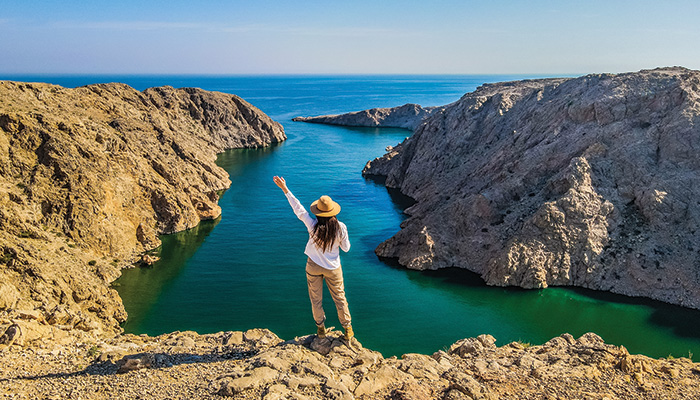
The Ultimate Oman Travel Guide: Mountains, Deserts, Beaches & Culture
Whether you’re planning your first visit or returning for more exploration, this guide to travel in Oman will help you navigate the country’s landscapes, culture, and seasonal wonders for an unforgettable journey.
Oman, situated on the southeastern coast of the Arabian Peninsula, is a land of contrasts and discovery, offering modern comforts alongside centuries of culture and breathtaking natural beauty. The country, known for its warm hospitality and peaceful way of life, invites you to explore, relax, and immerse yourself in its landscapes and traditions; it is sure to leave a lasting impression.
Getting There: Flying to Oman
All international flights to Oman arrive at Muscat International Airport, the country’s main gateway. Oman Air operates direct flights to Muscat from major cities like London Heathrow, and from Muscat, regional connections make it easy to access cities such as Khasab, Duqm, and Salalah. Muscat also serves as a hub for exploring the country’s diverse regions via Oman’s well-maintained roads, allowing you to easily reach the country’s mountains, deserts, coasts, and southern Dhofar.
Oman’s Natural Wonders: Mountains, Deserts, and Seas
Oman’s landscapes are beautiful and diverse. The Hajar Mountains rise dramatically from the desert, offering cooler temperatures, trekking trails, and awe-inspiring views. Jabal Akhdar, aka the Green Mountain, charms visitors with terraced farms, orchards, and slopes blanketed with wildflowers, and Jabal Shams, nicknamed Mountain of the Sun provides scenic hikes and dramatic cliff-edge vistas.
.jpg)
In contrast, the A’Sharqiyah Sands desert offers captivating dunes and golden horizons. Enjoy dune bashing, camel rides, or sandboarding, or simply sit back to watch the sun set over the dunes. The desert’s quiet nights, perfect for camping and stargazing, reveal one of Oman’s most peaceful natural experiences.
.jpg)
Oman’s coastline, stretching over 1,700 kilometers, offers tranquil beach settings and thriving marine life. Muscat’s Qurum Beach is ideal for relaxing days, and Ras al-Jinz is famous for witnessing turtles nesting.
.jpg)
The Dhofar region is a lush green paradise, particularly during the Khareef monsoon with misty hills and waterfalls. Inland, Oman’s wadis, like Wadi Shab and Wadi Bani Khalid, are hidden oases where turquoise pools and cascading streams provide perfect spots for swimming, hiking, and reconnecting with nature.
.jpg)
Adventure and Outdoor Experiences
For holidaymakers seeking outdoor adventure, Oman delivers. Some of the best things to do in Oman include desert adventures like dune bashing, camel trekking, and sandboarding, and Oman’s mountains offer trekking, biking, and exploration of traditional villages. The country’s coastline and wadis invite snorkelling, diving, and swimming, where encounters with dolphins, whales, rays, and turtles make for unforgettable moments.
.jpg)
Oman’s Dhofar region comes alive during the Khareef monsoon, turning green hillsides into a misty wonderland, with waterfalls and flowing streams. This season also hosts festivals celebrating local music, dance, and cuisine, offering a unique cultural experience alongside nature’s beauty.
.jpg)
Seasonal Travel in Oman
Oman’s climate varies depending on the region and season. Winter (December–February) offers mild temperatures of 15–25°C, ideal for desert camping, mountain trekking, and coastal exploration. Spring (March–May) brings warmer days, blooming orchards in the Al Hajar Mountains, and lush wadis, perfect for hiking and nature walks.
Summer (June–August) can reach 35°C, but cooler retreats are found in Dhofar and the mountain regions, where temperatures drop significantly. This season also coincides with whale shark diving and turtle watching along the coast. Autumn (September–November) gradually cools the northern regions, making desert safaris, coastal excursions, and cultural visits more comfortable.
Each season highlights a different aspect of Oman’s landscapes, culture, and natural beauty. The best time to visit Oman totally depends on what you’d like to experience on your trip; we recommend visiting when it’s not too scorching!
Culture and Heritage
Omani culture is deeply rooted in hospitality, family, and tradition. Visitors are greeted warmly, and are encouraged to dress modestly, particularly in religious and public settings. Respectful interactions and appreciation for local customs enrich any visit.
Cultural experiences in Oman are diverse. The Royal Opera House Muscat hosts international performances, and museums like the National Museum of Oman and Oman Across Ages Museum showcase the nation’s history and achievements.
.jpg)
Historical forts such as Nizwa Fort, Al Jalali and Al Mirani Forts, Nakhal, Al Rustaq, and the UNESCO-listed Bahla Fort reflect centuries of architectural inventions, and ancient villages and mud-brick settlements reveal Oman’s traditional way of life.
.jpg)
Oman is also home to impressive UNESCO World Heritage Sites, including the Archaeological Sites of Bat, Al-Khutm, and Al-Ain, the Land of Frankincense in Dhofar, the Aflaj Irrigation Systems, and the Ancient City of Qalhat, each telling a story of trade, agriculture, and cultural innovation across centuries.
.jpg)
Practical Travel Tips
• Currency & Payments: the Omani Rial (OMR) is the local currency. Cash, credit cards, and Apple Pay are widely accepted, and ATMs are plentiful.
• VAT Refunds: purchases over OMR 25 may qualify for VAT refunds, excluding tobacco, food, and oil products.
• Safety: Oman is one of the safest countries globally. Keep valuables secure, drive carefully in rural areas at night, and use offline maps for navigation.
• Etiquette: dress modestly, ask before photographing locals, avoid public displays of affection, and greet with a friendly ‘Assalam Alaikum’
By understanding Oman’s culture, climate, and seasonal variants, you can experience this majestic country to your heart’s content.
